
February
Festivals
GHODE JATRA (11TH APRIL 2021)
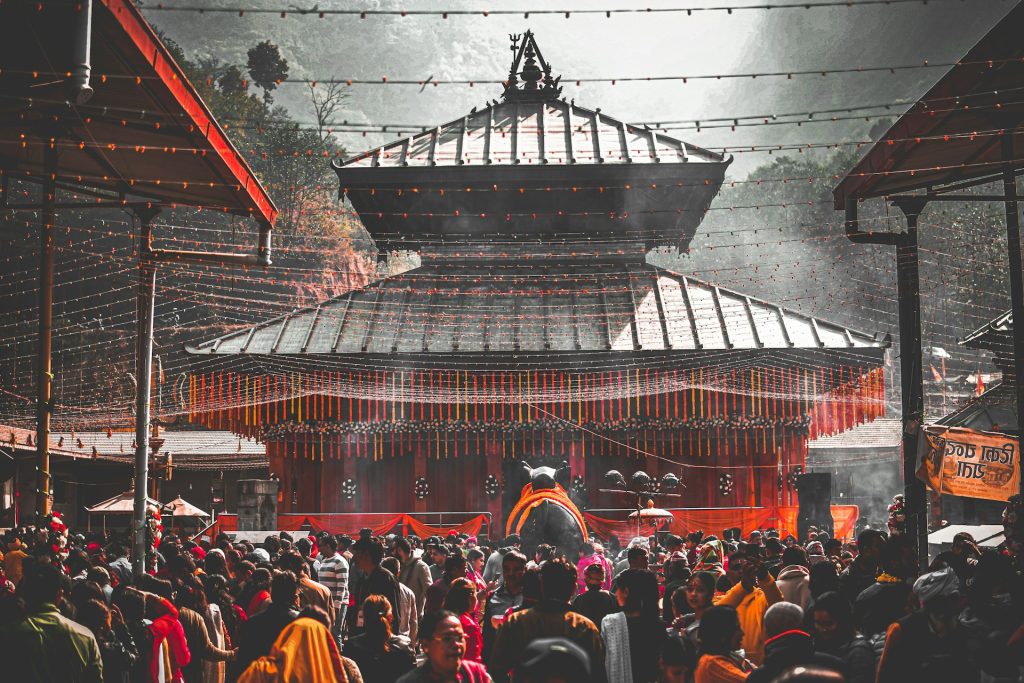
Ghode Jatra is a festival that is celebrated only in Kathmandu valley to ward off the demonic ‘Gurumapa’. It is said that the soul of the demon still lives underground at Tundikhel. So, to prevent the demon from rising again, a horse race is organized on this day by the Nepal Army. The event is observed by the president, the prime ministers and other dignitaries.
Being one of the ancient festivals, Ghode Jatra has become the national festival of Nepal. It is celebrated in a very formal way in Tundikhel where a demon Tundi was killed. Flocks of horses are deployed by the Nepali Army team where horses march and race followed by various stunts performed. Horse play is demonstrated with a series of arts. It is executed in an honor of victory over the demon believing to keep the evil away. The running of horses is taken as a good omen and a very good start for the upcoming year.
Apart from the event, Ghode Jatra is celebrated specially by the Newar communities in Kathmandu valley. They carry away the deities, Goddess Bhadrakali and Goddess Kankeshwari, over the streets of Asan just before the night of this festival. While in other areas of the valley too, the deities of the respective locality are carried away in the streets with the chanting of music and instruments.
In Bal Kumari, Patan, the horses are fed with alcoholic spirits and it is intoxicated and an equally drunk person in a traditional Newari attire rides it. People shout to frighten the horse until it runs wildly and the rider falls from its back!
BISKET JATRA (14TH APRIL 2021)
Bisket Jatra, one of the greatest street festivals in Nepal, is celebrated along the complex of the medieval monument of Bhaktapur Durbar Square. The festival is celebrated for 8 nights and 9 days. Although the festival unfolds a different story to its celebration, it is also marked as the celebration of New Year according to Nepali Calendar (Bikram Sambat). However the festival of Bisket Jatra itself is not related to Bikram Sambat.
The chariot procession of deities Bhairav and Bhadrakali followed by other deities in Khats (palanquin) is the major event of Bisket Jatra. Beginning from the Nyatpola temple, the chariots then moves through different parts of the city while stopping occasionally so people can worship.
First Day
On the very first day of Bisket Jatra, Bhairab and Bhadrakali are worshiped in their respective chariots in Bhairab temple in Taumadi Tole in Bhaktapur amid various special tantric rituals. The same evening both chariots are pulled by hundreds of people as a tug of war between the upper and lower part of Taumadi Square. They try to pull the chariot to their direction because the first day is Deo Kwayo Bijaayegu meaning “God comes down to the mass of people from his own sacred home.” But as per the ritual, chariots are pulled towards west from Taumadi Square.
Second Day
Then, on the second day, locals visit the chariot and offer their prayers, while a particular group take care of chariots and performs various rituals.
Third Day
The third day of Bisket Jatra follows the same as in the second day. People also offer their prayer and worship the God and Goddess, whose chariot was pulled on the first day.
Fourth Day
The fourth day is the last day of the year (Nepali New year) when the major event of Bisket Jatra takes place. Two lingos (poles) are erected in two different areas of Bhaktapur; one in the Pottery square around noon and another with two extended arms (representing snakes) in Bhelu Khel in the evening.
Thousands of people gather around to witness this unique celebration. The pole in Bhelu Khel is crashed down symbolizing the killing of the snake after the 24 hours of its erection. However, the pole in Pottery Square is kept for another five days.
Fifth Day
On the fifth day, people gather around Bhelu Khel and Pottery Square to worship the deities while sacrificing animals like goats and cocks. Along with Bhairab and Bhadrakali, other deities like Mahakali, Mahalaxmi, Barahi, and Ganesh are worshipped.
Sixth Day
The sixth day of Bisket Jatra is celebrated as Sindur (vermilion) Jatra in Thimi. People throw vermilion power over each other in the joy of welcoming New Year and spring. Tongue Piercing event is also observed in this day in Bode. A male volunteer gets his tongue pierced in a spiritual trance with an iron spike and walks around the town with a round bamboo rack with flaming torches in the shoulder. This event takes place during the chariot demonstration.
Kha Lawayaakeu Jatra meaning “God and Goddess from two opponents getting together” is celebrated on the very same day in different locations. Lord Ganesh and Bhairab’s chariot are brought together from two different places in Pottery Square, while people throw vermillion powder to each other marking Sindur Jatra. Likewise in the eastern part of Dattatreya Temple in Suryamadi tole, the festival is celebrated with small chariots of God Bramayeni and Maheshwari.
Seventh Day
On the seventh day of Bisket Jatra, the festival is celebrated worshipping local God and Goddess in different areas. Friends, family, and relatives come together to celebrate the festival and have a special feast too.
Eighth Day
Eighth Day is rather a colorful day when people wearing traditional dresses come in the streets and visit the whole city in a chariot procession. They also offer food items like fruits and sweets to local God and Goddess. The whole ambiance gets filled with joy as traditional music and dance starts vibrating.
The Last Day
The last day of Bisket Jatra marks the pulling down of lingo (pole) erected five days ago in Pottery Square. The pole is drawn amid the various rituals. Then, as evening falls on, Deo Tha Bijaayegu meaning “God now returns to his own sacred home” is observed when chariots of Bhairab and Bhadrakali are pulled towards an upward direction.
As the festival of Bisket Jatra is now coming to an end, people come together playing various traditional music instruments.
NEPALI NEW YEAR (14TH APRIL 2021)
Nepali people follow their own calendar system known as Bikram era or Bikram Sambat. New year is translates as ‘Nawa Barsha’ in Nepali language and observed as an official holiday. During the occasion, people go for picnics, have get-togethers and celebrate the day socializing in various ways.
Various rituals are conducted and yearly carnivals like Bisket Jatra, Sindoor Jatra and Bode Jatra are passionately carried out to welcome the New Year in traditional style. New year’s events and parties are also organized at clubs, hotels and restaurants for party lovers.
Bikram Sambat is 56.7 years ahead of the solar Gregorian calendar. It uses lunar months starting from Baisakh in mid-April, Jestha in mid-May which, Asar in mid-June, Shrawan in mid-July, Bhadra in mid-August, Ashoj in mid-September, Kartik in mid-October, Mangsir in mid-November, Poush in mid-December, Magh in mid-January, Falgun in mid-February, and Chaitra in mid-March.
RAM NAWAMI (21ST APRIL 2021)
Ram Nawami is the day celebrated in an honor and memory of Lord Ram, who is believed to be the incarnation of Lord Vishnu. The day is celebrated with great devotion by the Nepalese visiting nearby temple of Lord Ram with flowers and offerings. Lord Ram is symbolized as an ‘Ideal Man’ by the Hindu people. In Ramayana, his victory over ‘Ravan’ is seen as the manifestation of good over evil. On this day, large numbers of devotees are thronged in Ram or Vishnu temples all over Kathmandu valley and in other parts of Nepal. Ram Mandir in Battisputali, Changu Naryan in Bhaktapur, Budhanilakantha, Ichangu Naryan and Bichangu Naryan in outskirts of Kathmandu are filled with devotees. The Ram Janaki Temple in Janakpur holds thousands of visitors on this auspicious day.
Events
YAK RU (1ST TO 13TH APRIL)
Yak Ru is one of the toughest mountain biking races in Nepal starting from Besisahar in Lamjung district to the finishing point in Kagbeni, Mustang. The premier mountain biking race has different categories for men and women in which all the national and international riders can participate.
It is one of the toughest staged races in the world covering the distance of around 240 km and reaching an altitude of 5416 m. The race has 5 stages with one rest day at high altitude location for the better acclimatization before ascending Thorang La pass at 5416m. The cycling race takes you along the Annapurna circuit which is one of the classing trekking routes in Nepal.
After the event ends in Kagbeni, participants will have two more days of group ride along the semi-desert terrain of the legendary Mustang Valley. On the way to your return, you will have chance to take a refreshing dip in Tatopani, a natural hot spring which will add more wilderness to your biking event.
For the Yak Ru mountain biking race, the participants are needed to be physically and mentally prepared. The trail takes you along the subtropical forests to the alpine and tundra vegetation in Annapurna Conservation Area. The mountain biking is an opportunity to explore the hidden gems in the classic Annapurna circuit with the panoramic view of the Annapurna range throughout the trail.
Highlights of the Event
- Thorong La Pass (5416 meters)
- Cultural and spiritual spot i.e. Muktinath temple.
- Gurung and Thakali communities, and get a close insight into their everyday activities.
- The alluring views of Annapurna I (8091m), Annapurna II (7937m), Annapurna III (7555m), Hiunchuli (6441m), Gangapurna (7455m), Nilgiri North (7061m), Dhaulagiri (8167m), Machhapuchhre (6993m)
- Scenic waterfalls along the way.
- Deepest gorge, Kaligandaki Gorge, also known as Andha Galchhi